
The True Cost of Borrowing
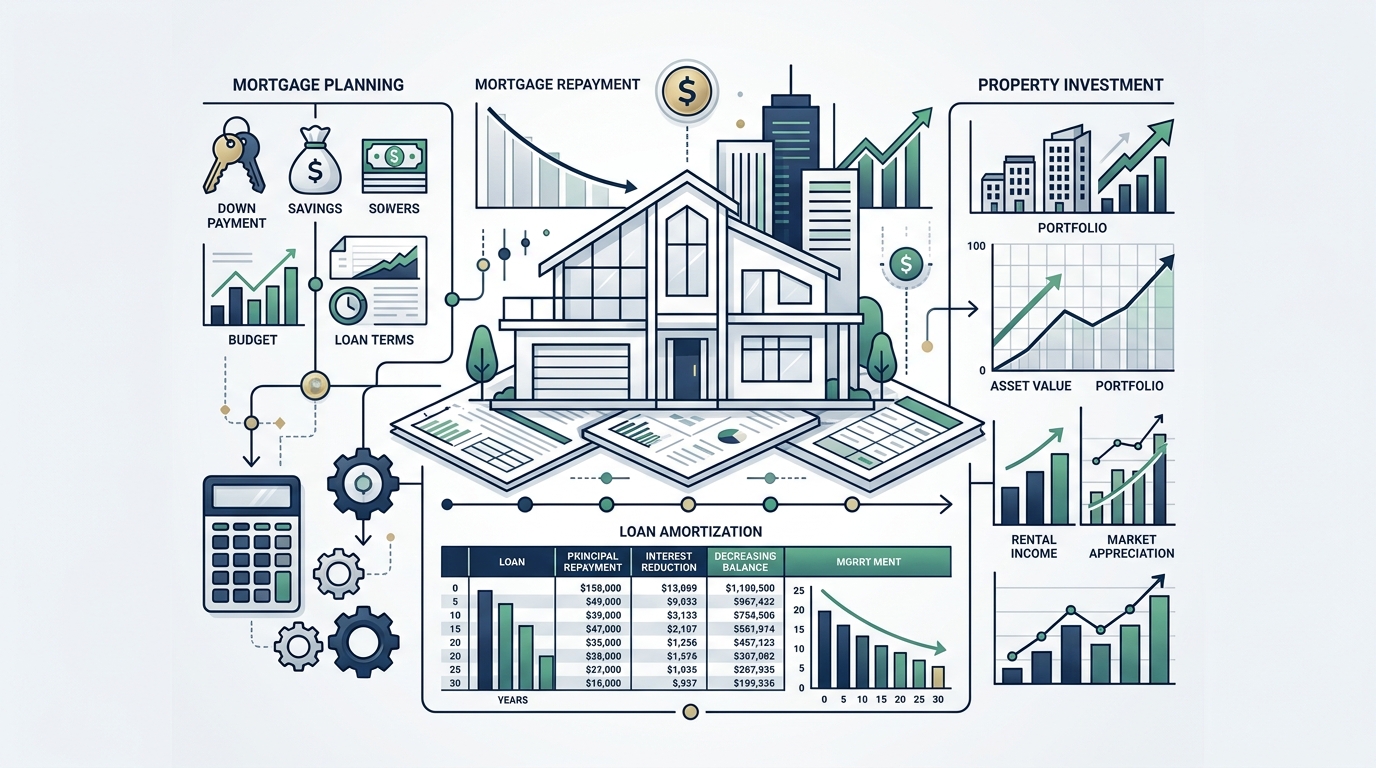
On a standard $400,000 mortgage at 6.5% interest, the borrower pays over $510,000 in pure interest over 30 years. Strategic principal acceleration eliminates years of front-loaded interest drag.
1. How Mortgage Amortization Works Mathematically
A standard fixed-rate mortgage uses an annuity equation to keep your total monthly installment identical throughout the term:
2. The Front-Loaded Interest Reality
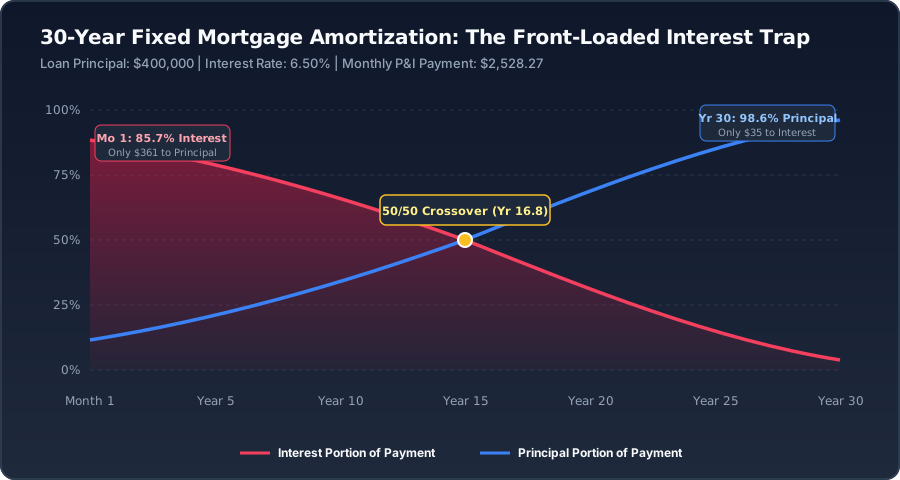
Because interest is calculated against the remaining unpaid principal each month, payments in the early years are overwhelmingly consumed by interest charges:
| Payment Period | Monthly Payment | Principal Portion | Interest Portion | Remaining Loan Balance |
|---|---|---|---|---|
| Month 1 | $2,918.49 | $387.24 (13.3%) | $2,531.25 (86.7%) | $449,612.76 |
| Year 5 (Month 60) | $2,918.49 | $540.80 (18.5%) | $2,377.69 (81.5%) | $422,161.42 |
| Year 15 (Month 180) | $2,918.49 | $1,061.78 (36.4%) | $1,856.71 (63.6%) | $328,958.91 |
| Year 22 (Month 264) | $2,918.49 | $1,755.20 (60.1%) | $1,163.29 (39.9%) | $205,053.12 |
| Year 30 (Month 360) | $2,918.49 | $2,902.16 (99.4%) | $16.33 (0.6%) | $0.00 |
3. The Bi-Weekly Payment Strategy
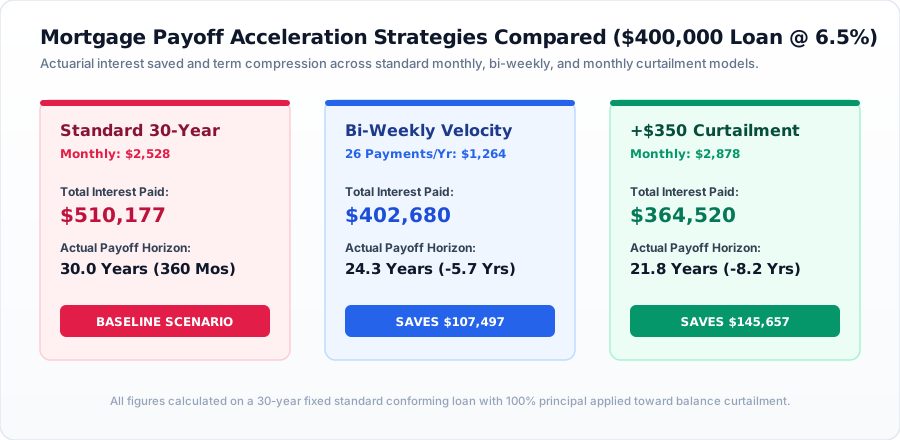
Paying half your monthly mortgage payment every two weeks yields 26 half-payments per year (equivalent to 13 full payments). That extra payment applies directly to principal, shortening a 30-year mortgage by nearly 5 years and saving over $90,000 in interest on a standard family mortgage.
4. Targeted Principal Curtailment Schedules
Systematically applying extra principal each month permanently lowers the base for all future interest calculations:
| Strategy on $400k Loan @ 6.5% | Monthly Outlay | Payoff Duration | Years Saved | Total Interest Saved |
|---|---|---|---|---|
| Standard Schedule | $2,528.27 | 30.0 Years | 0.0 Yrs | $0 |
| +$150/Month Extra Principal | $2,678.27 | 25.6 Years | 4.4 Yrs | $58,412 |
| +$350/Month Extra Principal | $2,878.27 | 21.8 Years | 8.2 Yrs | $108,630 |
| +$750/Month Extra Principal | $3,278.27 | 17.1 Years | 12.9 Yrs | $168,240 |
5. Recasting vs. Refinancing Comparison
Mortgage recasting allows borrowers who make a substantial lump-sum payment to lower their monthly required payment without paying expensive refinance closing costs or resetting the loan clock.
6. Payoff vs. Invest Opportunity Cost
Paying off a 6.5% mortgage delivers a risk-free, guaranteed 6.5% after-tax return. For loans above 6.0%, debt acceleration provides one of the strongest risk-adjusted financial strategies available.
Frequently Asked Questions
Why are mortgage interest payments so heavily front-loaded?
Interest is computed each month on the remaining loan principal. Because the principal balance is highest during the first decade, interest makes up the majority of every fixed payment.
How does a bi-weekly schedule reduce loan duration?
26 bi-weekly half-payments equal 13 full payments per year. The 13th payment directly reduces principal without being diluted by interest, cutting 4 to 6 years off a 30-year term.
What is the difference between recasting and refinancing?
Refinancing replaces the mortgage with a new loan at current rates with closing costs ($3k-$8k). Recasting keeps the existing rate and term but re-amortizes the monthly payment for a small $250-$500 fee after a lump-sum principal reduction.